

Understanding Even and Odd Roulette Bets
An even or odd bet is an outside roulette wager that pays 1-to-1 if it wins. Since each choice covers close to half of the numbered pockets, these bets are often regarded as comparatively favorable options. The guide below explains how zero pockets affect that apparent advantage.
How Even and Odd Bets Work
Roulette offers many types of bets, each with its own chance of winning and payout. Some options carry greater risk but pay more when they win; others win more often but pay less. This variety gives cautious players and those seeking more excitement different ways to play.
Roulette Wheel Layout: Even and Odd Numbers
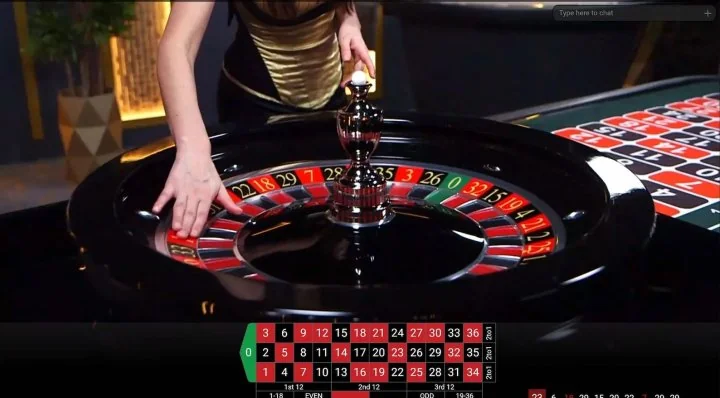
European and American roulette wheels both have 36 numbered pockets, from 1 to 36. European roulette also has one zero pocket, while American roulette has both zero and double zero.
Of the 36 numbered pockets, 18 are even and 18 are odd. Neither zero nor double zero is part of either group. An even or odd bet wins only if the ball lands on a numbered pocket with the chosen parity.
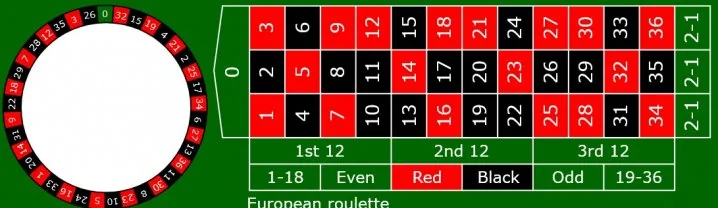
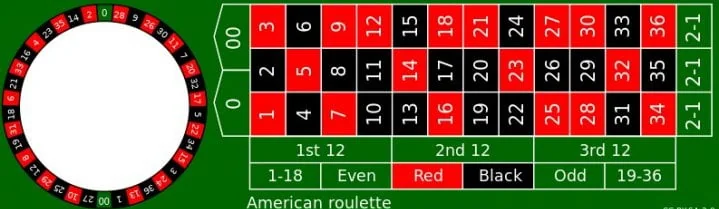
*The diagram above highlights the small structural difference between European and American wheels: the American version has an additional double-zero pocket.
Inside Bets and Outside Bets
Wagers when playing roulette generally fall into two groups. An inside bet covers one number or a small cluster of neighboring numbers, offering a lower chance of winning and a higher payout. An outside bet covers more pockets, increasing the chance of winning but paying less. Even and odd bets are outside wagers, since each covers nearly half of the wheel’s numbered pockets.
Bet Type Risk Level Potential Payout House Edge (European/American) Inside Bets Single Number High 35:1 2.70% / 5.26% Split High 17:1 2.70% / 5.26% Street High 11:1 2.70% / 5.26% Outside Bets Even/Odd Low 1:1 2.70% / 5.26% Red/Black Low 1:1 2.70% / 5.26% High/Low Low 1:1 2.70% / 5.26%
Note: The table above provides a quick comparison of inside and outside bets by risk and potential reward, which may help when deciding where to place chips.
How They Compare with Other Outside Bets
Even and odd are not the only popular outside bets. Players may also choose red or black, or high or low numbers. Like even/odd wagers, these bets have a chance close to 50% on a European wheel and similar odds on an American wheel. They differ in how they group numbers: color bets follow pocket colors, while high/low bets divide numbers by range.
Bet Type Chance of Winning (European/American) Payout Distinctive Features Even/Odd 48.64% / 47.36% 1:1 Straightforward to understand, with a chance close to 50% Red/Black 48.64% / 47.36% 1:1 Chance close to 50%; easier to follow visually High/Low 48.64% / 47.36% 1:1 Spreads wagers across options, with a chance close to 50% Dozens 32.43% / 31.58% 2:1 Higher payout; covers 12 numbers Columns 32.43% / 31.58% 2:1 Higher payout; covers a vertical column of 12 numbers
Note: The table shows that even/odd, red/black, and high/low bets each have a chance close to 50%. Dozens and columns are less likely to win, but offer larger potential payouts.
Winning Probability and the House Edge
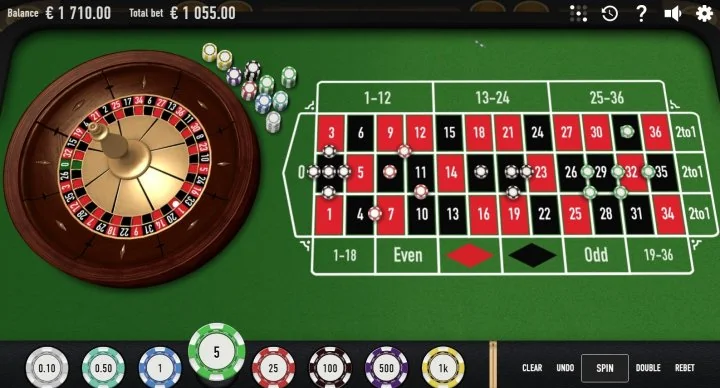
Imagine a roulette wheel with 36 numbered pockets, from 1 to 36, and no zero or double zero. Half the pockets would be even and half odd, so either wager would have a probability of 18/36 = 0.5, or 50%. Because every pocket belongs to one of these groups, this simplified wheel would make the bets fair, with no house edge.
A real wheel has more than 36 numbered pockets: European roulette also includes a zero. An even or odd wager therefore wins with probability 18/37 = 48.64%. The odds of winning are 1.01-to-1, but the payout remains 1-to-1. Because the payout does not reflect the actual probability, the casino has an approximate 2.7% house edge.
American roulette also has a double-zero pocket, further lowering the chance that an even or odd wager wins. The probability is 18/38 = 0.4736, or 47.36%. A winning bet still pays 1-to-1, despite true odds of 1.11-to-1. This produces a house edge of approximately 5.26%.
Understanding the House Edge
The house edge is the casino’s statistical advantage over a large number of plays. A 1-to-1 payout may seem fair, but the zero pockets make the chance of losing greater than the payout suggests. An even or odd bet has a better chance on European roulette than on American roulette, although the casino retains an advantage on both. Of these wheel types, European roulette has the lower edge for this wager.
The “En Prison” Rule
French roulette and some European roulette games use the “En Prison” rule. The French phrase means “in prison.” If a spin lands on zero, an even or odd stake may be held for the next round rather than settled right away. This reduces the house edge on even-money bets; check the table rules to confirm whether the rule applies.
Summary
Even and odd wagers are popular roulette choices, offering modest payouts and lower risk than many inside bets. Since each covers a large portion of the numbered pockets, they can help a player’s bankroll last longer. They do not, however, eliminate the house edge.
These bets are not for everyone. Some players prefer the excitement of a bigger potential return: a single-number wager can pay as much as 35-to-1, but has a much lower chance of winning. Players drawn to higher risk may prefer that option over betting only on even or odd.